2015 Ford Escape
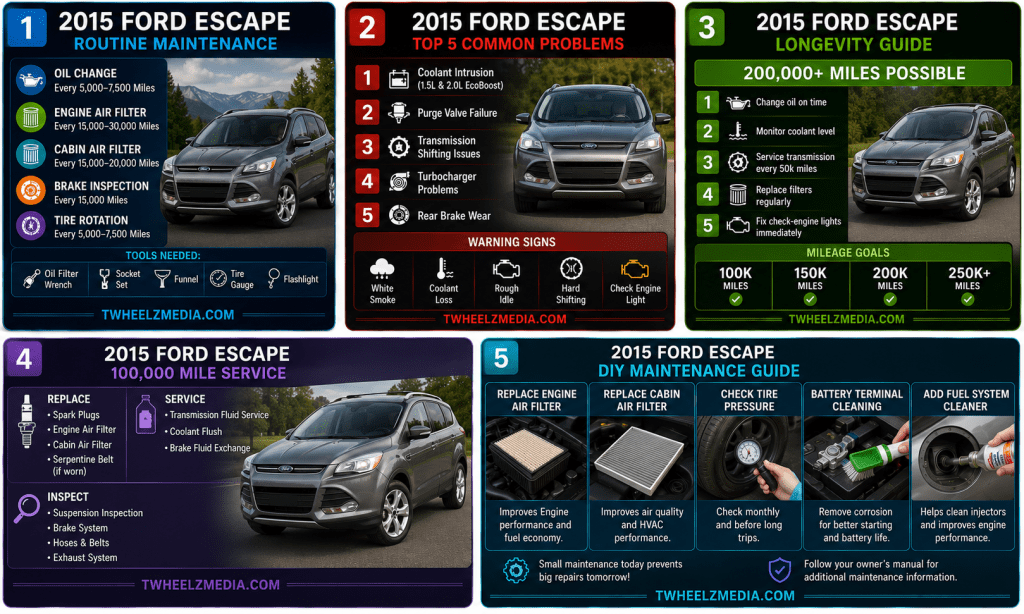
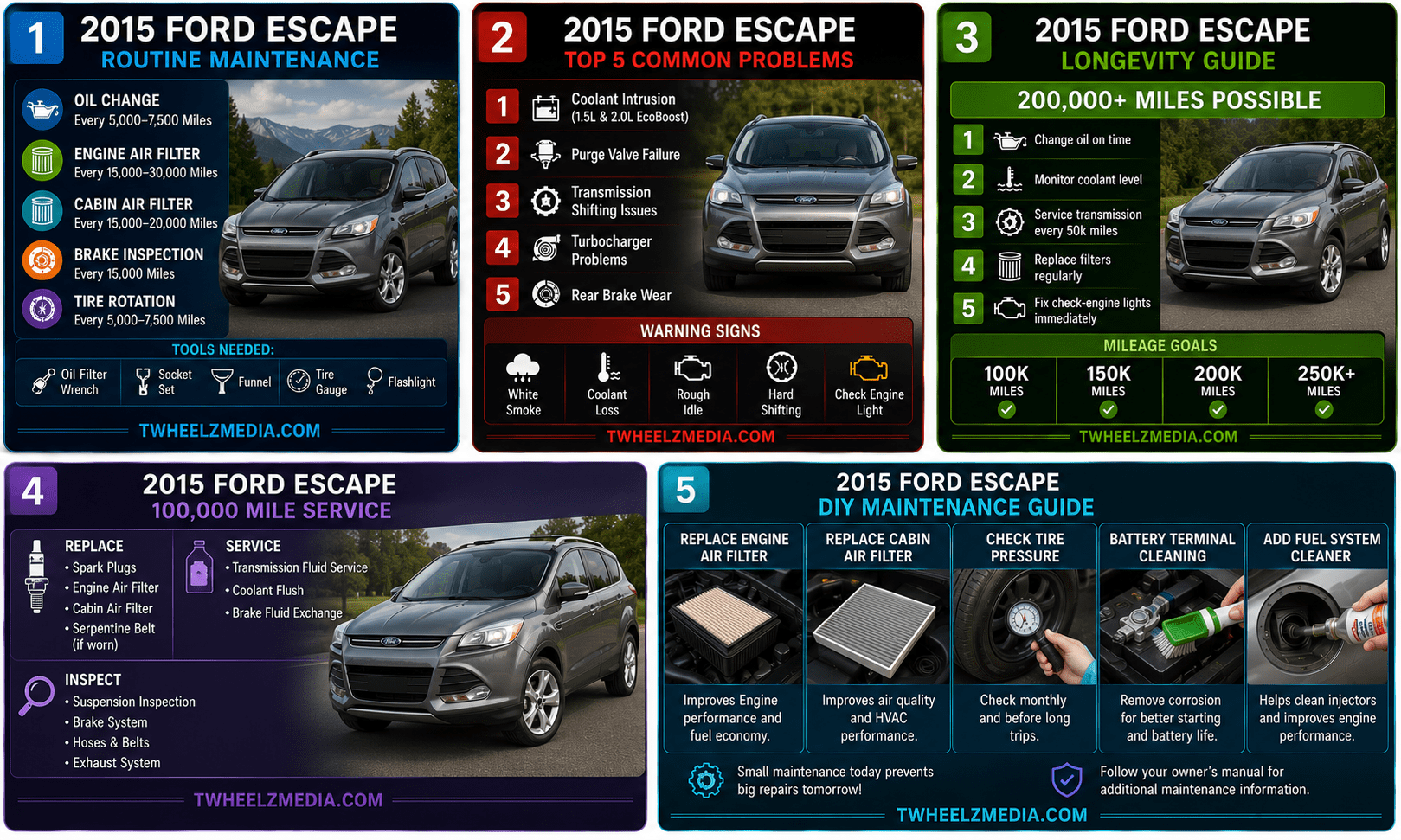
2015 Ford Escape Routine Maintenance Guide: How to Keep Your Escape Running Beyond 200,000 MilesMeta DescriptionComplete 2015 Ford Escape maintenance guide covering oil changes, filters, brakes, transmission service, common problems, 100,000-mile maintenance checklist, FAQs, and preventive care tips to help your Escape last over 200,000 miles.IntroductionThe 2015 Ford Escape remains one of the most popular compact SUVs on the road thanks to its comfortable ride, fuel efficiency, cargo space, and available EcoBoost engine options. Whether you own the 2.5L naturally aspirated engine, the 1.6L EcoBoost, or the 2.0L EcoBoost, routine maintenance is critical to maximizing reliability and avoiding expensive repairs.A properly maintained 2015 Ford Escape can easily exceed 200,000 miles. This guide covers recommended service intervals, oil changes, filters, brakes, fluids, and major maintenance items every Escape owner should know.—Oil Change ServiceEngine oil is the most important maintenance item on any vehicle.Recommended Oil Change Intervals- Full Synthetic Oil: Every 5,000–7,500 miles- Severe Driving Conditions: Every 5,000 miles- Highway Driving: Up to 7,500 milesOil Capacity2.5L Engine- 5W-20 Full Synthetic1.6L EcoBoost- 5W-20 Full Synthetic2.0L EcoBoost- 5W-30 Full SyntheticBenefits of Regular Oil Changes- Reduces engine wear- Prevents sludge buildup- Protects turbochargers- Improves fuel economy- Extends engine lifeAlways replace the oil filter during every oil service.—Engine Air Filter MaintenanceThe engine air filter protects the engine from dirt and debris.Replacement Interval- Inspect every 15,000 miles- Replace every 30,000 milesSymptoms of a Dirty Air Filter- Reduced fuel economy- Poor acceleration- Rough idle- Increased engine noiseReplacing the air filter is one of the easiest DIY maintenance tasks on a Ford Escape.—Cabin Air Filter ServiceThe cabin air filter keeps dust, pollen, and contaminants out of the passenger compartment.Service Interval- Every 15,000–20,000 milesBenefits- Cleaner interior air- Better HVAC performance- Reduced odors- Improved airflowMany owners overlook this inexpensive maintenance item.—Brake System MaintenanceBrake inspections should be performed regularly to maintain safety.Brake Pad LifeTypical lifespan:- Front Pads: 30,000–60,000 miles- Rear Pads: 40,000–70,000 milesWarning Signs- Squealing noises- Grinding sounds- Brake vibration- Increased stopping distanceBrake FluidRecommended replacement:- Every 2–3 yearsFresh brake fluid helps maintain proper braking performance and ABS operation.—Tire MaintenanceTires directly affect safety, fuel economy, and handling.Tire RotationRecommended:- Every 5,000–7,500 milesBenefits include:- Even tread wear- Longer tire life- Improved handling- Better fuel economyTire PressureCheck monthly and before long trips.Improper tire pressure can lead to:- Uneven wear- Reduced MPG- Poor handling- Premature tire replacement—Cooling System ServiceThe cooling system is especially important on EcoBoost-equipped Escapes.Coolant ServiceRecommended:- Every 100,000 miles or 10 yearsInspect Regularly For- Coolant leaks- Cracked hoses- Damaged reservoirs- Low coolant levelsCommon Warning Signs- Rising temperature gauge- Coolant smell- Engine overheating- White exhaust smokeEcoBoost owners should pay close attention to coolant levels.—Transmission MaintenanceThe 6-speed automatic transmission benefits from regular service.Transmission Fluid ServiceRecommended:- Every 50,000–60,000 milesBenefits:- Smoother shifting- Reduced wear- Longer transmission lifeWarning Signs- Hard shifts- Delayed engagement- Slipping gears- Transmission shudder—Battery MaintenanceAverage battery life:- 3–5 yearsInspect- Battery terminals- Cable connections- Corrosion buildupSymptoms of a Weak Battery- Slow starting- Dim headlights- Electrical issues- Clicking noise during startup—Common 2015 Ford Escape ProblemsCoolant Intrusion (EcoBoost Engines)One of the most discussed Escape issues.Symptoms:- Coolant loss- White smoke- Engine misfires- Check Engine LightPurge Valve FailureSymptoms:- Hard starts after refueling- Rough idle- Check Engine LightTurbocharger ProblemsSymptoms:- Lack of power- Whining noises- Excessive smokeRear Brake WearMany Escape owners report accelerated rear brake wear.Transmission ConcernsWatch for:- Rough shifting- Hesitation- Delayed gear engagement—100,000-Mile Service ChecklistAt 100,000 miles, perform a comprehensive inspection.Replace✓ Spark Plugs✓ Engine Air Filter✓ Cabin Air Filter✓ Serpentine Belt (if worn)Service✓ Coolant System✓ Transmission Fluid✓ Brake FluidInspect✓ Suspension Components✓ Ball Joints✓ Tie Rod Ends✓ Wheel Bearings✓ Struts and Shocks✓ CV Axles✓ Exhaust System✓ Motor Mounts✓ Turbocharger Components—How to Reach 200,000 Miles1. Change oil every 5,000–7,500 miles.2. Monitor coolant levels monthly.3. Service the transmission regularly.4. Replace filters on schedule.5. Rotate tires consistently.6. Address warning lights immediately.7. Use quality replacement parts.8. Inspect brakes regularly.9. Fix coolant leaks immediately.10. Keep maintenance records.Following these practices dramatically increases the chances of reaching 200,000 miles or more.—Frequently Asked QuestionsHow often should I change the oil in a 2015 Ford Escape?Every 5,000–7,500 miles using quality full synthetic oil.What is the biggest problem with the 2015 Ford Escape?EcoBoost-equipped models are known for coolant intrusion and cooling system concerns.When should spark plugs be replaced?Typically around 100,000 miles.How often should transmission fluid be changed?Many technicians recommend every 50,000–60,000 miles.Can a 2015 Ford Escape last 200,000 miles?Yes. Many well-maintained Escapes exceed 200,000 miles with routine maintenance.—Internal Link Suggestions- 2015 Ford Escape Common Problems- How To Change Oil In A Ford Escape- Best Synthetic Oils For EcoBoost Engines- Signs Of A Bad Purge Valve- Ford Escape Brake Replacement Guide- Turbocharger Warning Signs- How To Check Coolant Levels- Vehicle Maintenance Checklist For BeginnersTags2015 Ford Escape Maintenance, Ford Escape Oil Change, Ford Escape Common Problems, Ford Escape 100000 Mile Service, EcoBoost Maintenance, Ford Escape Brake Service, Ford Escape Filters, Preventive Maintenance, Vehicle Longevity, Ford Escape Repair Guide